On that brutal Sunday morning at Pearl Harbor, Captain Mervyn Bennion stayed on the burning bridge of West Virginia with his guts torn open, still fighting for his ship and his men long after any reasonable man would have let go.
Read the full article for more on:
Important insights and detailed analysis
Expert commentary on current events
Breaking developments and updates
Updating summary...
Medal of Honor Monday: Mervyn S. Bennion – From Utah Farmlands to Pearl Harbor
Guy D. McCardle
Speed
1x
Listen
COMMENTS
On that brutal Sunday morning at Pearl Harbor, Captain Mervyn Bennion stayed on the burning bridge of West Virginia with his guts torn open, still fighting for his ship and his men long after any reasonable man would have let go.
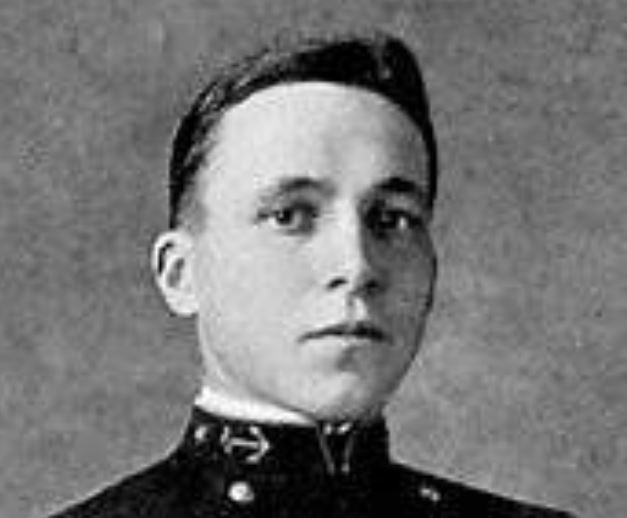
A young Mervyn Bennion looks straight into the future with the calm, steel-hard focus of a man already preparing to carry a ship and its crew on his shoulders.
Mervyn Sharp Bennion was born on May 5, 1887, in Vernon, Utah Territory, a remote farming town carved out of desert scrub and Mormon pioneer grit. His grandfather, John Bennion, had emigrated from Wales with the Mormon pioneers and built a cattle operation near Taylorsville, Utah. Growing up in a large family, Bennion embodied the quiet values of hard work, faith, and service passed down from those early settlers.
Advertisement
After high school in Salt Lake City, he earned an appointment to the United States Naval Academy (USNA) at Annapolis in 1906. He graduated with his class of 1910, placing third. His younger brother, Howard Bennion, would go on to graduate first in his 1912 class at the United States Military Academy — proof that service ran deep in the Bennion family.
After commissioning in 1912, Bennion’s first assignment was aboard the armored cruiser USS California. He developed into a skilled ordnance and gunnery specialist, later serving in the Ordnance Bureau at the Washington Navy Yard as the First World War unfolded.
Over the years, Bennion’s record remained steady, unflashy, but rock-solid. He commanded destroyers like USS Bernadou and led Destroyer Division One. He served tours on various battleships and cruisers, sharpened his strategic mind with studies at the Naval War College, and steadily climbed the ranks. On June 21, 1941, he was given command of the battleship USS West Virginia — the last command that would ever carry his name.
Advertisement
Fate Intervenes — Pearl Harbor, December 7, 1941
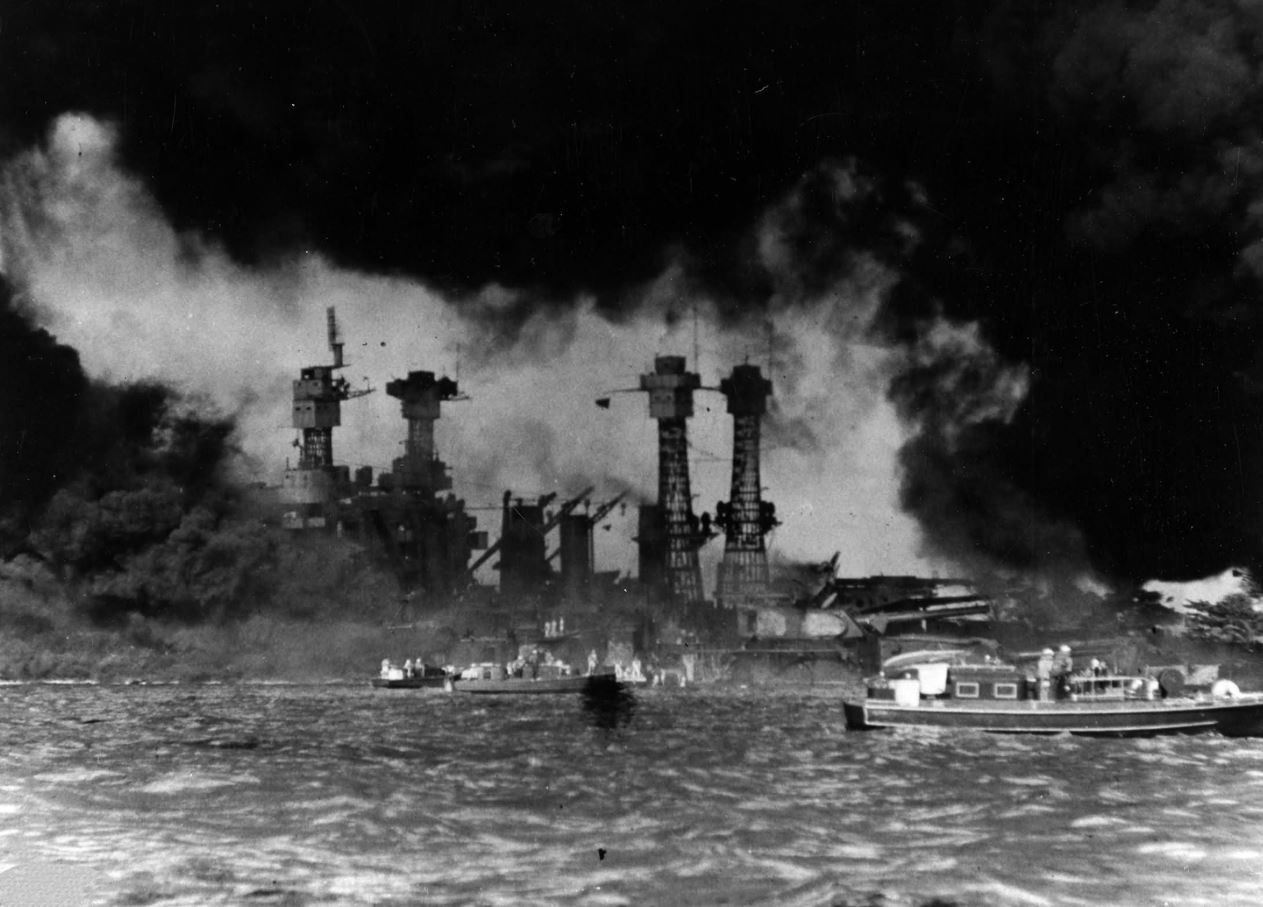
Sunday morning, December 7, 1941. On Battleship Row at Pearl Harbor, West Virginia — moored outboard of USS Tennessee — rested in relative calm. Then the sky erupted. Before 08:00, Japanese bombers and torpedo planes struck the fleet. West Virginia took multiple torpedo hits amidships port side, soon followed by at least two bombs.
Amid the chaos, Captain Bennion remained on the bridge, issuing orders, coordinating flooding countermeasures to stabilize the listing ship, and directing damage control efforts. Then a bomb struck near the Tennessee. One of its fragments — a jagged piece of shrapnel — ricocheted across the harbor and smashed into Bennion’s upper abdomen. The wound was catastrophic: it partially disemboweled him and shattered his lower spine, rendering his legs useless.
Advertisement
Rather than call for help or accept evacuation, Bennion refused to leave his post. Reports say he protested being carried off the bridge. With one arm, he held the wound closed, even as blood loss threatened to carry him into unconsciousness. Even so, he continued giving orders while sailors scrambled to save the ship and each other. Eventually, he relented and allowed crewmen to move him, but only after telling them to save themselves first. He died from his wounds as West Virginia burned and took on water.
The USS West Virginia burns on the water on December 7th, 1941. Photo by the US Navy.
A Medal of Honor — And a Legacy Permanent as Steel
For conspicuous devotion to duty, extraordinary courage, and complete disregard for his own life, Captain Mervyn Sharp Bennion was posthumously awarded the Medal of Honor. His citation noted that even mortally wounded, he remained focused on fighting and saving his ship, and protested being carried from the bridge.
As a mark of respect, the Navy christened a destroyer in his name , the USS Bennion (DD-662), launched on July 4, 1943. His widow served as sponsor.
Advertisement
For his home state of Utah, Bennion remains one of its most honored sons. His remains were returned from Hawaii and laid to rest at the Salt Lake City Cemetery in October 1947. His name lives on in monuments such as a marker at the Memory Grove Memorial in Salt Lake City, grouped with other Medal of Honor recipients from the state.
Why Captain Bennion Matters — Then and Now
Captain Bennion was not the headline-grabbing showman. He did not crave glory. He was a man molded by quiet duty, born of pioneer stock, raised in church and farm values, hardened by decades aboard the Navy’s toughest ships. In the sudden inferno of Pearl Harbor, he showed what ordinary virtue, calm under fire, loyal to his crew, unwilling to let the enemy or the sea steal his ship or his men, looks like when it matters most.
His refusal to abandon his post while mortally wounded shows us with razor-sharp clarity about what command truly demands. His decision to stay is the kind of leadership that embodies the best traditions of the Navy: duty above self, mission first, and keep the men protected.
In the broader American story, Bennion is a reminder that heroism often comes from men who didn’t crave the spotlight. He stood as a shield between living and dying for dozens of sailors that day. Families on the mainland got a promise: even when the skies fell on December 7, their Navy would have someone who refused to yield.
Remembering as Pearl Harbor Week Fades Into Memory
This week marks another Pearl Harbor anniversary. It is fitting we turn our eyes to Captain Bennion. His name floats through history quietly, like the faint echo of naval guns at dawn, but carries weight. The destroyer named for him carved a respectable path across the Pacific. His grave rests among those of other Utah’s sons who fought under the American Flag. His deeds are etched into the memory of the Fleet.
Every time a sailor steps aboard a warship, every time the Stars and Stripes waves over a deck at sea, they sail in part because men like Captain Bennion anchored the idea: some ships are saved, not by shells or armor, but by a single man refusing to abandon them when all else burns around him.
History may move on. Ships may rust away. But courage like his stays, as enduring as steel.
—
** Editor’s Note: Thinking about subscribing to SOFREP? You can do it now for only $1 for your first year. Pull the trigger on this amazing offer HERE. – GDM
Advertisement
What readers are saying
Generating a quick summary of the conversation...
This summary is AI-generated. AI can make mistakes and this summary is not a replacement for reading the comments.









COMMENTS